Often quoted inaccuracies in both its build details, and its eventual fait leave a web of intrigue that would flatter the best novelists efforts.
Having spent 35 odd years staring at the few original pictures of the car, talking to the factory guys involved, reading the contemporary factory reports, and collecting any remaining original parts from the project leads to this brief history of the brief life of the GT6R.
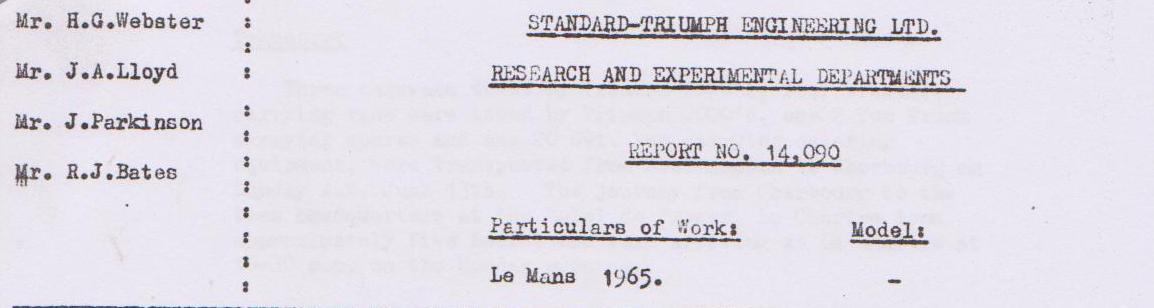
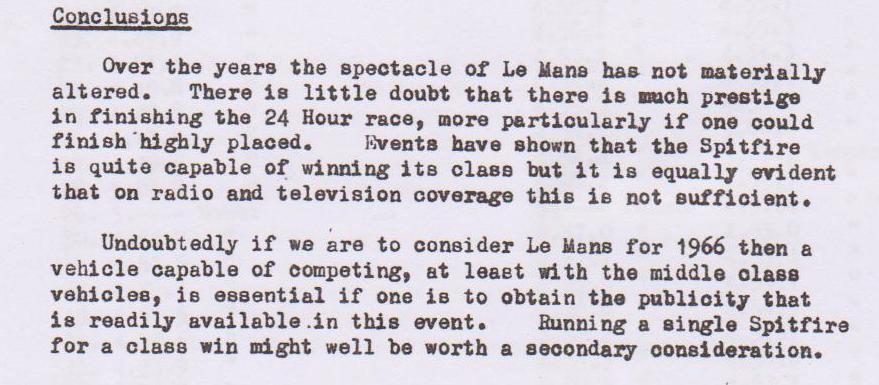
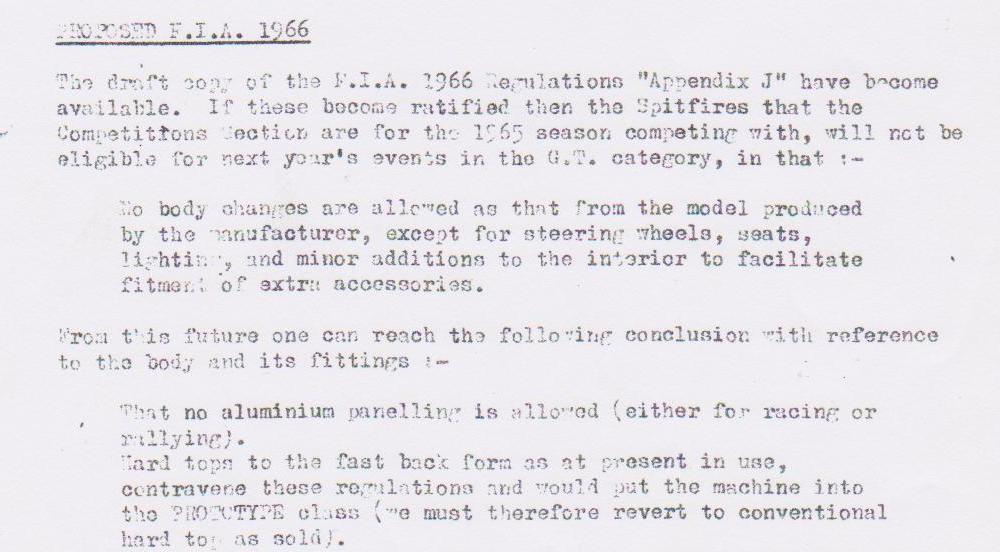
This contradicts somewhat later historians suppositions that the basis of the GT6R was ADU1B (an all aluminium, and fibreglass bodyshell). This information may have come about as a result of confusion as to which Spitfires were being used/consumed in the 1965-6 Bill Bradley factory sponsored race program. Allthough it is true that the remains of ADU1B (after its crash at Le Mans 1965) were used later to rebuild Bills 1966 car (ADU2B) after its crash at Nurburgring.
So what did form the basis of the new car? There are three well known contemporary pictures of the car taken by the resident ST photographer showing it less bonnet. There are others, less well known with the car in the background with other experimental cars in the foreground.
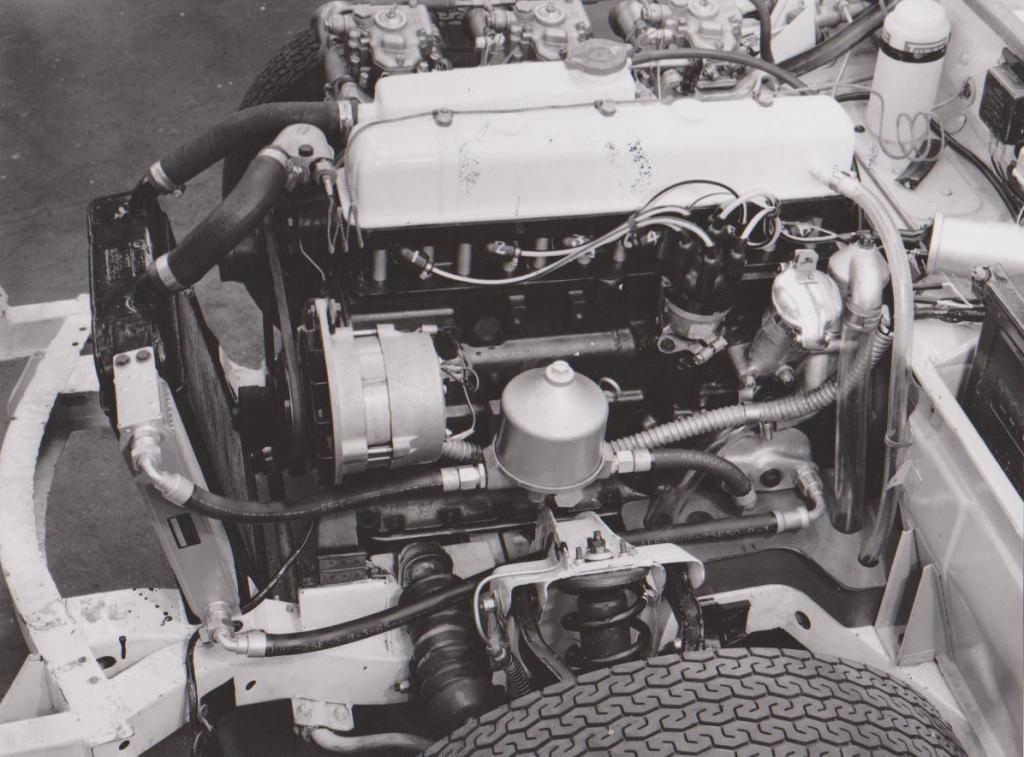
The bulkhead on the 64/65 Le Mans cars was/is considerably different to that of a steel production car. The above picture shows a production steel bulkhead. The alloy bulkheads were riveted together with a mixture of dome head, and countersunk solid rivets depending on where the panels were joined, there are no such rivets in the above picture. The alloy bulkheads did not have a conventional heater plenum fitted as in the above picture. They utilized a complicated 2 part plastic plenum that was riveted to both the front face of the bulkhead, and the underside of the bonnet. There are myriad other detail differences between an aluminium bulkhead, and a steel production type (as above), none of which are evident in any picture of the GT6R.
More to come...