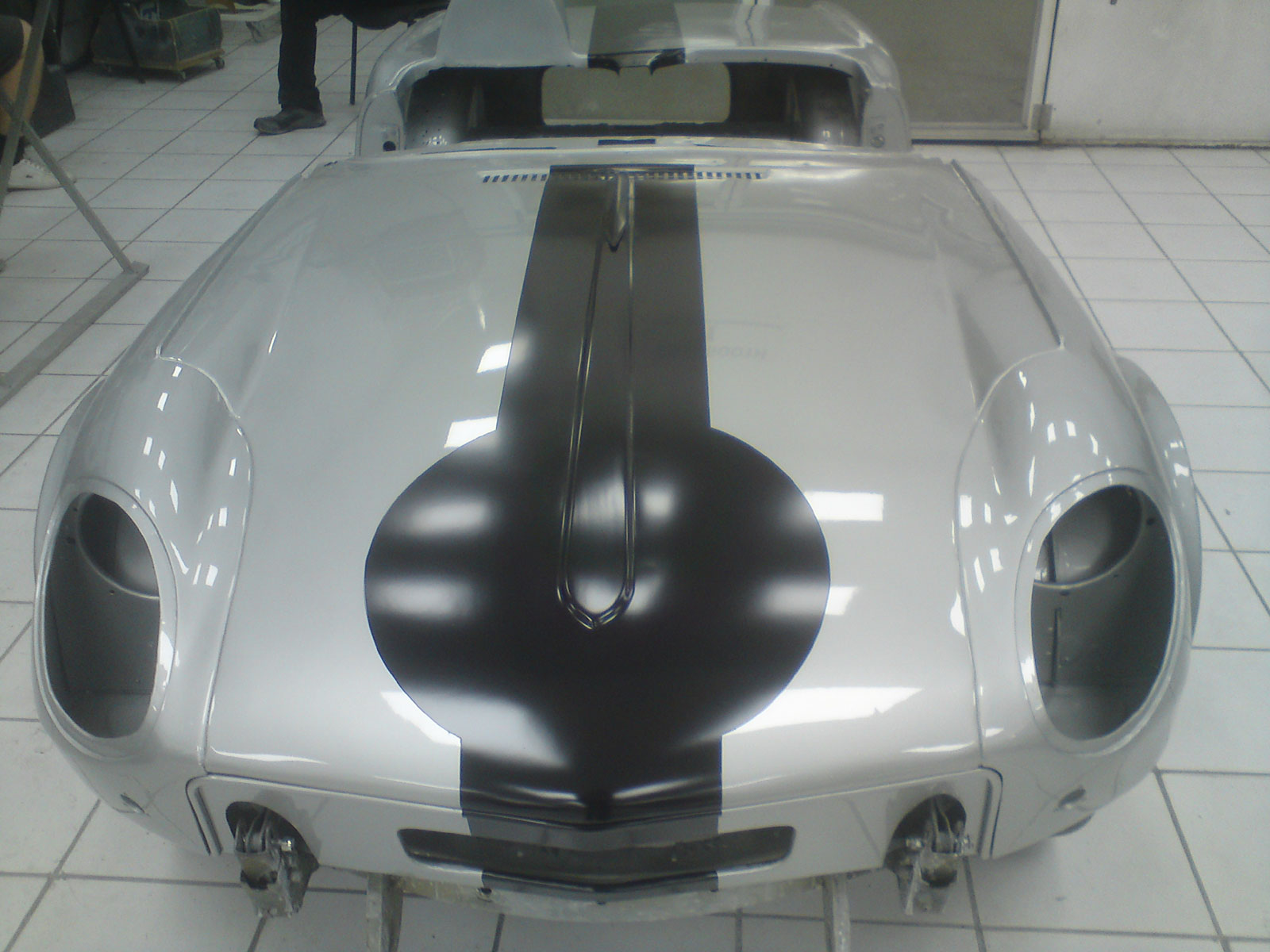
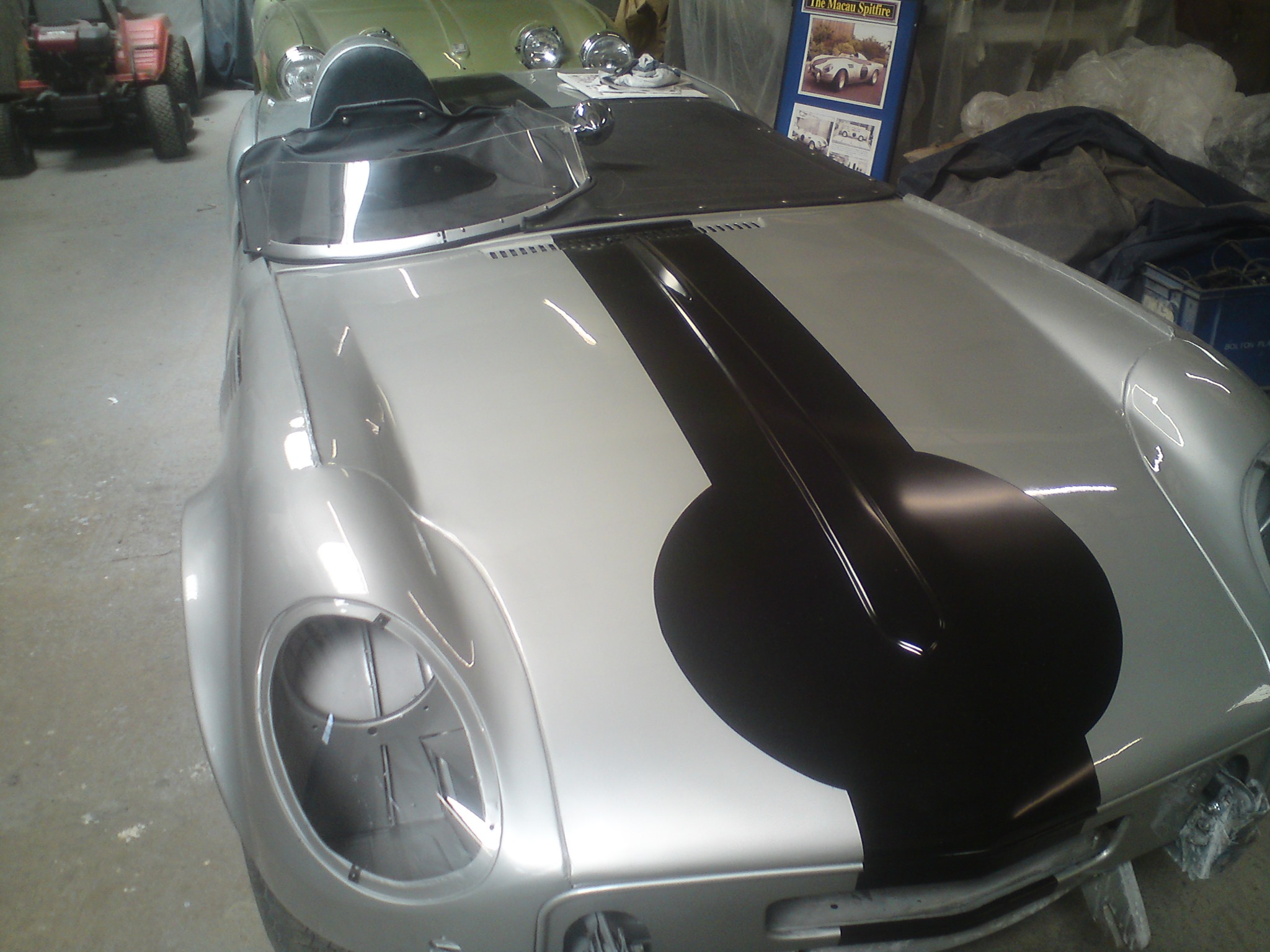
A Brief History
If you have been waiting for a history of this most famous Triumph Spitfire to appear on our website then I apologise for the delay. For even though I have dreamed of owning it since I first saw a picture of it on the cover of one of Graham Robson's first books, The Story Of Triumph Sports Cars, written in 1973, and have actually owned it for 2 years, it has taken to now to collate the huge amount of source material we have gathered about The Macau.
It would have been easy to simply copy verbatim one of the many potted histories that have appeared over the years in publications far and wide, and we think we have a copy of them all! One of the the most obvious reasons not to do this, is which one should we pick, as they all seem to contradict each other in many fundamental areas!
I am indebted to many for their contributions but the following deserve special mention.
Vernon Brannon - owner of Le Mans Spitfire ADU 4B and president of the Vintage Triumph Register, who filled in most of the gaps through the cars history through its time in the USA in the 'lost years' the mid 1970s, up to its export to Switzerland in 1991.
Bernard Robinson - editor of the Triumph Sports Six Club magazine, 'The Courier', and long time Macau fan, who provided some lovely pictures, and moral support when the decision was being made to spend an inordinate amount of money on such a small car!
Kas Kastner - former head of the Triumph competitions department in the USA and one time owner of The Macau, who's reminisces and pictures can be seen elsewhere on this site (Kas Kastner Musings).
Fred Nicklin - ex Triumph test driver who in his time drove most if not all of the Le Mans Spitfires including lapping the Mira test track at nearly 130mph in The Macau, lucky man. A frequent visitor to our premises, Fred's reminisces always keep us spellbound, Fred you should write a book, wink, wink! One snippet of information Fred divulged is that he actually drove The Macau past our gate on his way to that famous Mira 130mph track test. Apparently we are on one of the former Triumph test routes. Fred remembered the run to and from Mira being almost as exciting as the track itself, remember the car wasn't registered and had a straight through open exhaust, he said it seemed that he was chased by every dog in Warwickshire!
Ray Henderson - head of Triumph experimental and in overhaul charge of the construction of all Triumph competition cars through the Spitfire period. Ray who still lives locally, spent a day with us, and amongst the many things learnt that day was that Ray used to keep his boat in one of our sheds whilst he worked at Triumph!
So here it is, no guess work, no copying other people's work, I have the car here in front of me and paperwork and photographs from nearly every of its 38 odd years.
The Early Years
The Macau Spitfire's conception and actual construction is well documented with several excellent photographs in the Heritage archive showing the method used to turn a endurance coupe in to a single seater open short circuit screamer. Built for the November 1965 Macau Grand Prix and commissioned by Walter Sulke of Z.F. Garages the Standard Triumph distributors in Hong Kong. The basis of the car used the all aluminium tub of the 1965 Le Mans Spitfires, the coupe roof being substituted for a flat glass fibre deck with a raised hump behind the drivers head aping the Jaguar D type arrangement. A rigid strut linked the rear deck and the dash top from which a soft tonneau (not solid as some have stated) covered the redundant passenger compartment with not even a seat fitted. From the curved Perspex windscreen forward it was almost all standard Le Mans with fared headlamp aluminium and glass fibre bonnet, 70X engine producing 108bhp on twin 45 DCOE Webers, sitting on a lightweight chassis.
Always right hand drive there seems to be a deal of confusion by some authors about it having at some time being converted to left hand drive which it never was. Maybe this confusion arose due to the cars chassis number which is suffixed with an 'L' normally indicating an export car built left hand drive, or maybe its because pictures have appeared in print over the years (including one in a parts suppliers catalogue) where the negative has obviously been reversed giving the appearance of a left hand drive car! Critical examination of the unique bulkhead area of The Macau today reveals no alterations or repairs that would have been necessary in the conversion to LHD and the re conversion back to RHD. More critically the people who would have carried out the conversion and re-conversion all tell me they have no recollection of doing it, so it didn't happen!
At the end of October 1965 the car was shipped to Hong Kong, not much time to prepare for the race on November 28th! Walter Sulke managed a third place in the 30 lap Grand Prix against stiff competition including Jaguar E types, Lotus Sevens, and Formula Junior cars. Later at the same event Albert Poon drove the car to a second place in the Portuguese Trophy race.
Although raced successfully in further races in the far east The Macau's stay out there was short, returning to the Triumph competition department in Coventry early in 1966. Here it appears the car was fettled for a further period of racing this time in the United States for which it was despatched on the 13th April 1966 aboard the 'Moidancer'.
Kas Kastner
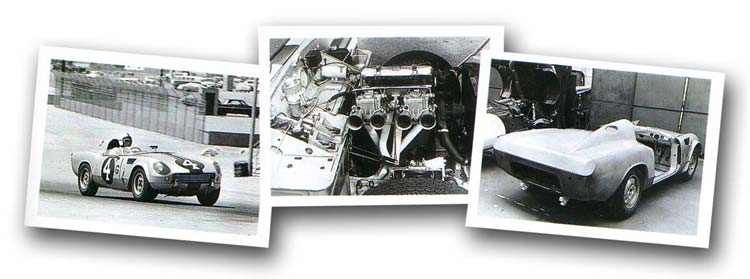
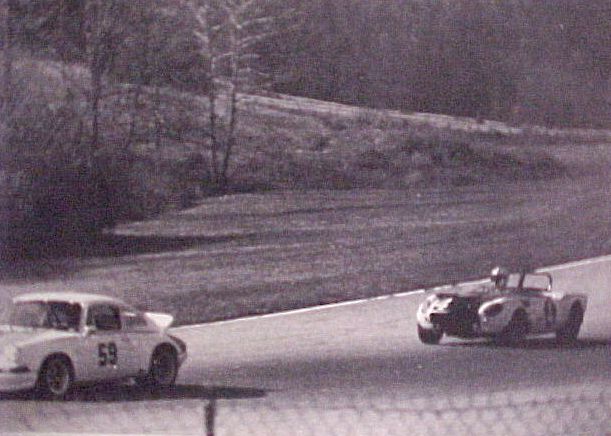
Delivered into the hands of ace Triumph tuning guru Kas Kastner The Macau was soon pressed into service with Kas's preferred driver Charlie Gates. Racing in a series called the USRRC (U.S. Road Racing Championships) the car proved uncompetitive in its original 1200cc form against larger capacity cars, and only ran in this form for 2 or 3 races. Kas recalls doing the now famous 2 litre 6 cylinder conversion over the Christmas holidays in 1966 ready for the 1967 season. At the same time the original 22 gallon 'Le Mans' petrol tank was replaced with a sealed 'Moon' smaller capacity aluminium racing tank to satisfy the current regulations. Also incorporated around this time to satisfy the USRRC regs was a passenger seat, necessitating the removal of the centre spine, the tonneau cover over the passenger compartment, and the installation of a full width Perspex screen. The bonnet gained extra bulges and scoops and took on a far more aggressive appearance. Kas remembers winning $800 after getting a third place in the under 2 litre class at Riverside. Kas has supplied several pictures from this period taken at both Riverside and Cottati race tracks shown on these pages.
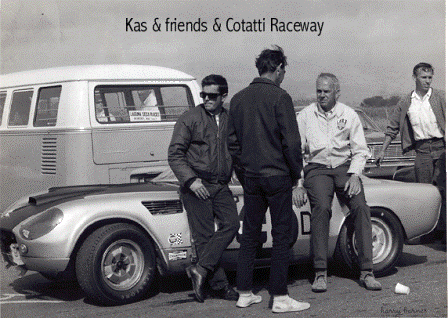
Towards the middle of the 1967 season the car was painted overall white and the hump behind the drivers head was removed probably to make it look even less like a single seater.
After the 1967 season Kas quickly disposed of The Macau, as he has said out with the old in with the new, new projects came along and The Macau was now surplus to requirements.
Kas Kastner Musings
When we bought The Macau we did some fairly detailed research into the history including contacting as many past owners as possible. We now know (or think we know!) The Macau's history for every year of it's life. Thanks to the contributions of people like Ray Henderson (Triumph Competition's), Fred Nicklin (Triumph test driver), Vernon Branon (owner of ADU 4B and ace researcher), and Kas Kastner (one time owner of Macau) we have filled in a few of the gaps in The Macau's history. There follows the musings of one Mr Kas Kastner on his period of ownership of the car which ran from April 14th 1966 to the 2nd February 1968 (yes we know the actual dates!). Thanks also to Mr Kastner for the pictures he forwarded along with his e-mail as reproduced below.
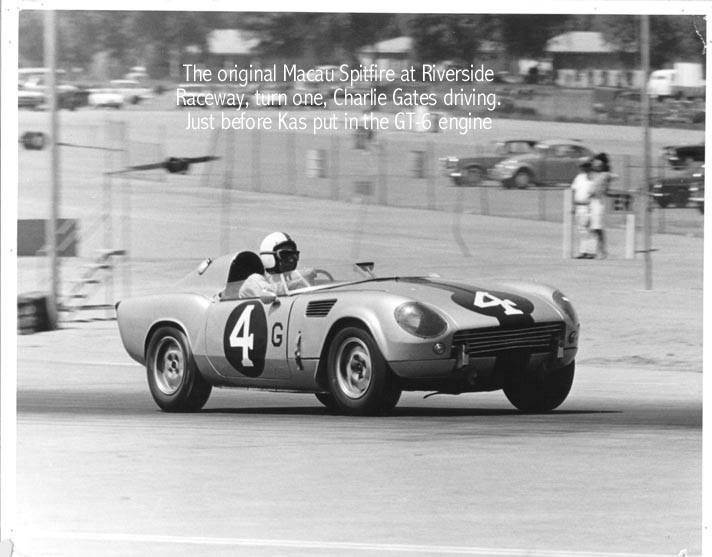
Yes, I did put in the 6 cylinder engine and built the scoop for the hood to clear the valve cover. Hard to remember other things but I'll look through my photos and see if I've got some others that might give some better views. I do believe that I put a TR-4 gearbox in it but don't remember any dates, probably early '64 ish. I thought I did cause I remembered putting in the TR-4 rear motor mount (the tranny one) but you know that was 35 years ago and I've had so many cars and did so many conversions and modifications... sometimes it gets a little confusing.
I changed the tank because we were running pretty short races and needed a sealed unit for technical inspection. Whatever the chassis was when I got the car is the same one that is in it now for all of me. I did not change it, not having a reason or the time or facility or money to do it.
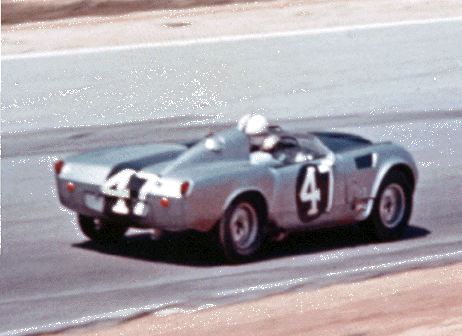
Bigger radiator, 2 litre engine and the TR-4 gearbox were installed and we ran the car in a new series called the United States Road Racing Championships which was a fore-runner to the Can-Am. This was circa '65-'66. We ran in the under 2 litre section and did okay. The straight line was great but too small a brakes and tyres held the car from really being a thing of real performance. It looked great on the track though and always caused a lot of comment.
I guess it would have probably been in '67 cause that would have given me time to do the conversion over the Christmas holidays. We ran it two or three times in the 1147cc form but were not even close to being competitive against such new and modern design cars not devised from a production unit, so I figured I'd do something about it.
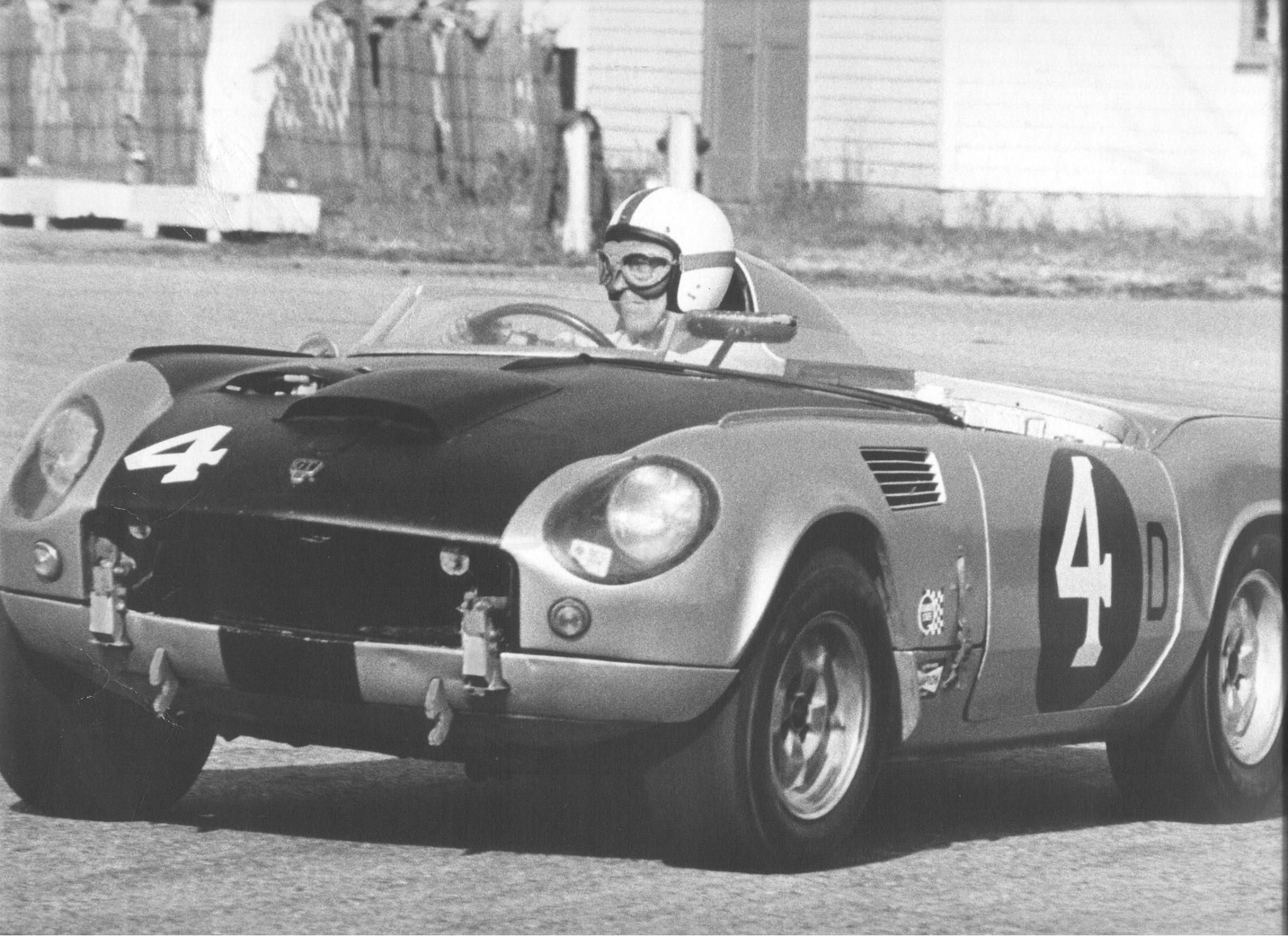
It went a lot better with 200bhp under the bonnet. I think (probably) we got a third in the under 2000 class at Riverside because I do remember we made $800 that day. I've checked all my photos and nothing has a date on it.
Sorry but at the time it didn't mean a damn thing so why bother with the details. This was strictly a fun thing toy for me to get away from the production car regulations and hum drum. Charlie Gates was the only one to drive the car for me.
Getting back to the roto-flex, I just don't remember what the car had as received. Whatever Ray Henderson (who worked in Triumph experimental/competitions) sent to Macau, that's what I had and that's what I sold. This means that if it was updated then another owner along the way did that part. I am guilty of the engine and hood scoops though. The original parts are long "gone". I have no idea as they were not worth anything to me at the time. I expect I used the head on some cheater engine for someone to win with. I have found four photos, two in colour with 2000cc engine and one with the 1147cc engine all at Riverside with another at a track in Northern California called Cottati north of San Francisco.

I would expect I sold the car right after the season in 1967 as I was up to my ears with spying for Harry Webster and worrying about emissions and also getting ready for the new 6 cylinder cars. I hope you understand I am rather a ruthless character and when I'm finished with a tool I want it out of my sight. That's how I felt about the cars... out with the old and in with the new. Too much to do and too little time and no money.
I do not remember the guy I sold the car to in Texas. It might sound familiar if I heard his name. (Seems I sold a lot of cars into Texas) What happened to it after that I have no idea. I think I have a couple photos in my collection that you might find of interest. One is the original configuration with Charlie Gates driving at Riverside California.
I was also at the factory when they were making this car... never thinking I would have it in my control later. We kind of raced this as a lark and fun, and it was just that.
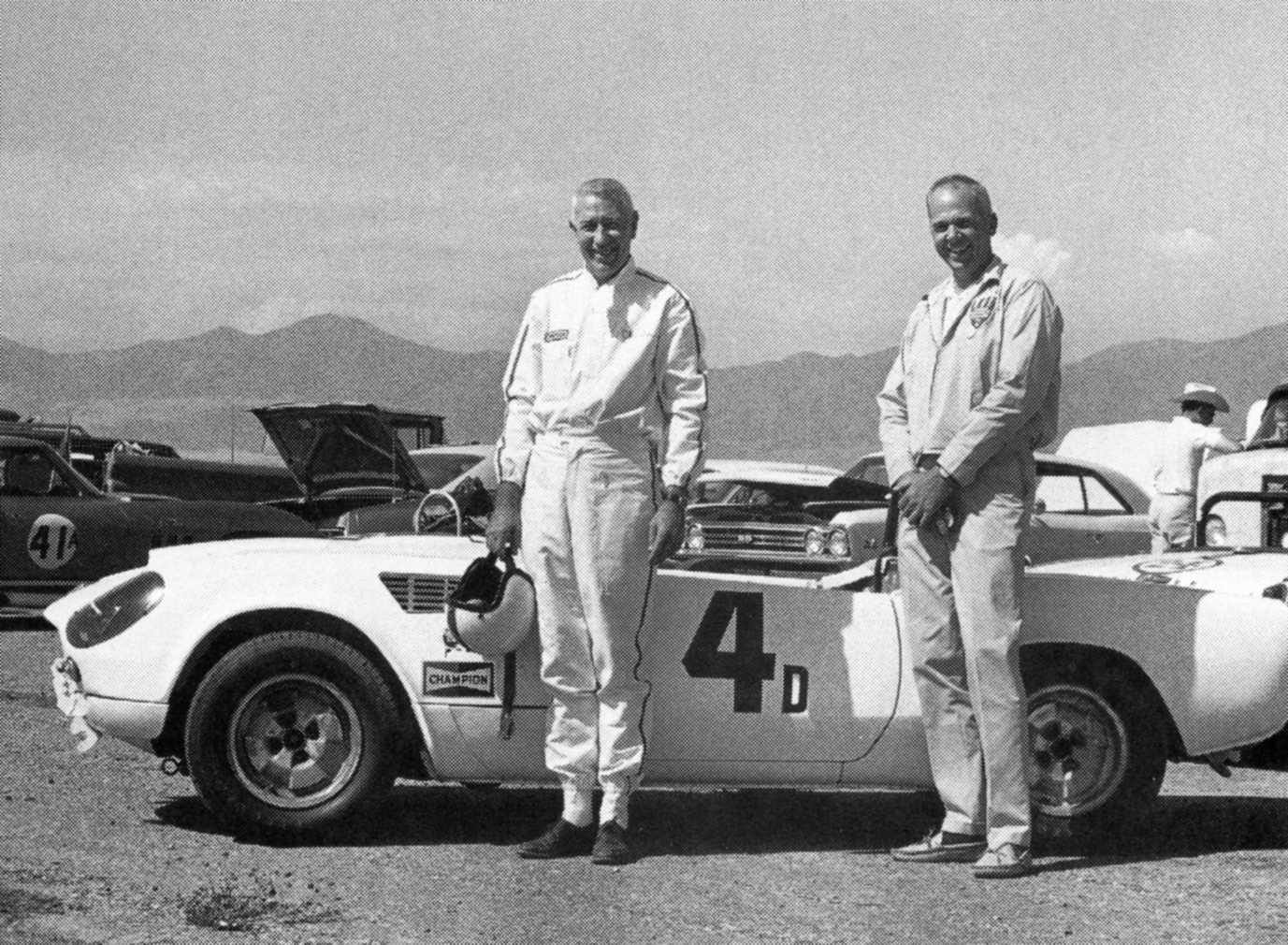
Kas Kastner
The 1970s
The car passed to Alamo Sports Cars in Texas in February 1968 who raced it in the SCCA (Sports Car Club Of America) Nationals. It may have been during this period that the original magnesium wheels were substituted for wider Lotus 'wobbly' magnesium wheels.
The following mail was recieved from Ray Ariola that clears up this part of the Macau's history;
My name is Ray Ariola and I have been employed at Alamo Sports Cars for 11 years. I do part time work for a retired gentleman here named Robert Alexander on his stable of british cars( Spitfire, TR6, TR7,MG, even a Turner MKI, among others)this weekend while finishing up on an engine rebuild on one of his Spitfires, we were talking about other cars he has owned and he told me that he was an owner of the Macau spitfire at one time.
As he related it, he purchased it from Mr. Robin Eschauzier who founded Alamo Sports cars, who purchased it from Kas Kastner. Mr. Alexander sold the car to Gerry Barry (who licensed it for street use). He remembers the car as having the rotoflex rear suspension, and wobbly web wheels when he owned it. So it might be safe to assume that Mr. Eschauzier had those modifications made at his Triumph dealership.
Thanks for clearing that up Ray.
The Macau changed hands again in July 1974, this time Barry Jerry (Gerard T Barry) being the lucky chap. Mr Barry actually registered The Macau for the road with the registration PKN 689 in the county of Bexar Texas in November 1979.
The 1980s
The Macau then passed to Forristall's GT Cars Inc, in Houston Texas in early 1981, from whom Dave Seibert of Atlanta Georgia bought it for $8000 in February 1981.
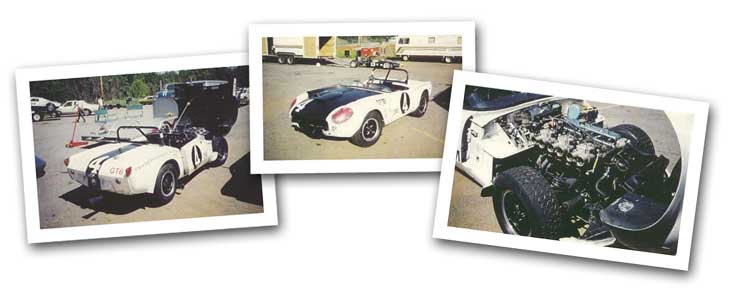
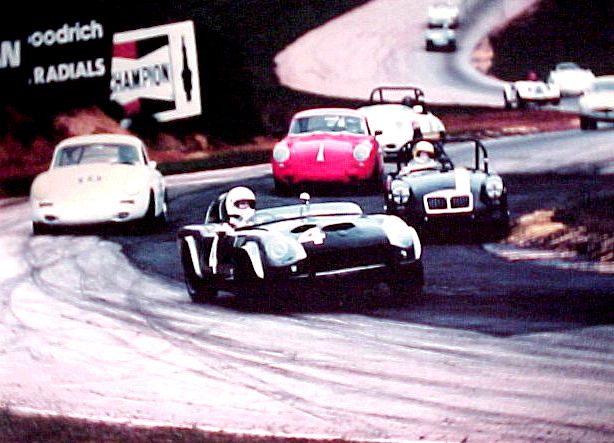
Mr Seibert continued to race The Macau in historic events including the Atlanta Vintage Grand Prix in November 1984, there still being stickers from this event in the car. Prior to this Mr Seibert had gone some way to restoring the car to its 60's spec by re-installing a hump behind the drivers head, and re-painting The Macau overall silver with a black painted bonnet top. This is very much as the car appears today, the paint having stood up well to the last 20 years.
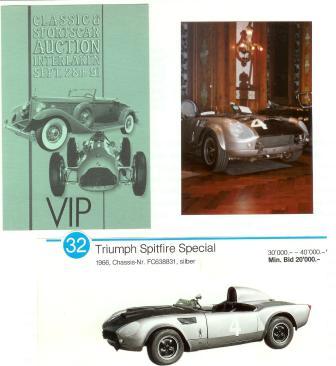
During 1987 the car was again advertised for sale bringing enquires from Europe. We are not sure if it was sold at this time but the next time The Macau had a public airing was when it turned up for auction in Switzerland in September 1991.
The 1990s - Dieter Messmer
Bought by a Swiss motor trader Dieter Messmer for the equivalent of £6000 The Macau was back in Europe. During his ownership the centre spine joining the rear deck and the dash top was replaced enabling the passenger tonneau to be refitted. The Macau seems to have been used little during this time doing only the occasional local hill climb.
The Wanderer Returns
Save a brief visit to these shores in the mid 1990s Triumph's most famous racecar has been wandering the globe since it left Coventry in 1965.
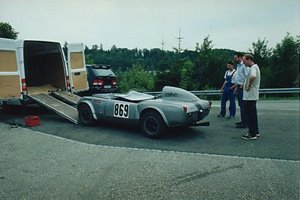
Now back in Coventry for good care of Canley Classics Triumph Specialists The Macau's future is assured.
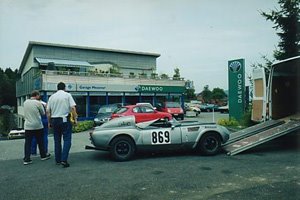
Soon to be housed in a purpose built museum dedicated to Triumph, growing to become one of the largest collections of Triumph prototypes, racecars, and memorabilia in the world.
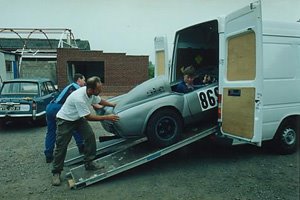
Originally built for the 1965 Macau Grand Prix in which it finished third overall it had many further successes in the Far East before being shipped to Triumphs American racing department.
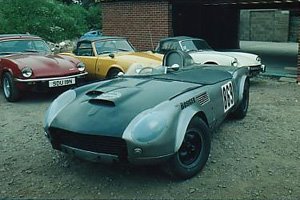
Here it was modified by Triumph tuning Guru Kas Kastner for a further period of racing. Dropping into temporary obscurity in the late 1970s early 1980s, at one time actually used as a road car by a Texan owner in the mid 1980s.
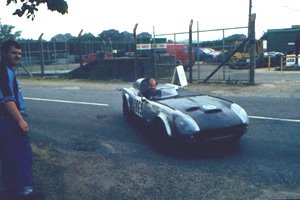
Surfacing at a Classic car auction in Switzerland in the early 1990s it was bought and kept in a private collection in Switzerland until last week.
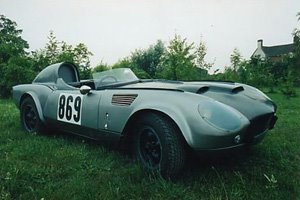
Now in need of sympathetic restoration the car is however in remarkably original condition for a well used former racecar. After The Macau's period of inactivity the engine needed a little work before it was again fired up for a short drive along the roads it left 35 years ago.
2001 - Back Home in Coventry
It became common knowledge in Triumph circles in 1999/2000 that for the right money The Macau was available yet again. In 2001 we made our first tentative enquiry, checking the cars provenance and the price! On the 4th July 2001 we rented a Mercedes Sprinter and drove to Switzerland to buy The Macau. On arrival our initial impressions were disappointing, parked in an underground garage blocked in by several other dead cars, under a layer of dust The Macau sat forlornly on 4 flat tyres. After much pushing and shoving we managed to get the car out into the daylight where Dieter tried to get the engine started on petrol that smelt ancient. After several failed attempts pools of foul smelling petrol were forming on the floor under the open ram pipes of the 45 DCOE Webbers, this promptly caught fire! This was quickly put out and further attempts at starting the car were quickly forgotten about. Despite this I was more than satisfied that this was indeed The Macau before me, and I was happy to see the excellent condition of the basic car and the many original 1965 features still in situ.
Back home in Coventry we quickly gave the car a good wash, polish, and servicing after its period of inactivity. Temptation got the better of me and I steered The Macau out of Canley Classics gate straight on to Triumphs old test route mentioned by Fred Nicklin above, and cobwebs were duly dispensed with (in both me and the car!).
Since then The Macau has been regularly exercised including re-visiting the Mira test track with Fred Nicklin driving ( Classic Car Magazine article reproduced here), a blat around Enstone Airfield ( Practical Classics Magazine article reproduced here), and being displayed at the NEC Classic Car show and the Triumph Show at Stoneleigh.

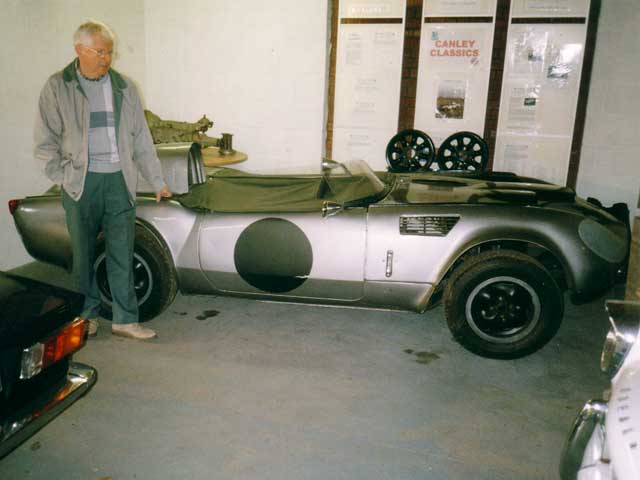
David worked at the Triumph and actually drew up the Macau's special features. He was also responsible for the manufacture of the Macau's fibre glass panelwork including the rear deck, and hump. David has promised to help us reinstate a more sympathetic (to the original) hump.
The Macau today